During the Christmas season we encounter various depictions of the nativity scene (aka a creche) in homes, churches and public displays. It would be typical to look upon such displays with a sense of empathy. Most people are able to identify to some degree with the raw humanness of the biblical Christmas story. Those who have had children can especially relate in some way to this young couple with little means having their first child in a place far away from home. Attending the young couple are shepherds and wise men who remind us this story is very inclusive – it has something to say to everyone from the very poor to the very rich.
The nativity scene would not have been all that unusual in those days. Babies were being born in tents out in the desert (and still are). The commonness is one important aspect of the creche, but we would be mistaken if we think the commonness is the point of the story. Had the birth of Jesus been just a natural event, it never would have been included in the gospels. The gospel writers did not intend for us to think that way. What a creche fails to do is clearly demonstrate the extensive supernatural aspects of the story. Consequently, the creche can tend to undermine the real point of the story.
The birth of Jesus was not natural – everything about it was supernatural. At every turning point there is something other-worldly taking place. This should not escape our attention. Consider the following brief run down:
- Luke 1:5-25
- An angel visits Zacharias to announce the coming birth of his son, John the Baptist.
- Zechariah is stricken dumb until his son is born.
- Mary’s cousin, Elizabeth, who is barren and advanced in years becomes pregnant.
- Luke 1:26-38
- An angel visits Mary and announces the coming birth of her son.
- Mary becomes pregnant even though she is a virgin.
- Luke 1:57-79
- Zechariah’s speech is restored.
- Zechariah is filled with the Holy Spirit and prophesizes.
- Matthew 1:18-25
- An angel appears to Joseph in a dream telling him to take Mary as his wife.
- Luke 2:8-20
- An angel of the Lord appears to shepherds announcing the birth of Jesus.
- A multitude of angels appear following the announcement.
- Luke 2:22-38
- Simeon was foretold of the coming Messiah and met Jesus and his parents in the temple.
- Anna also was foretold of the Messiah’s coming and waited for him for decades at the temple.
- Matthew 2:1-12
- The Magi followed a star which led them to Bethlehem…went before them…and stood over where the Child was found.
- The Magi are warned in a dream not to return to Herod.
- Matthew 2:13-23
- An angel appears to Joseph in a dream instructing him to take Mary and Jesus to Egypt.
- An angel appears to Joseph in a dream again to tell them to return to Israel.
- Joseph is instructed by an angel yet again to stay away from Jerusalem and go to Nazareth.
In our modern culture dominated by materialistic thinking, it is all too easy to be dismissive of supernatural events. What are we to make of the preponderance of unworldly activity in this story? Are they to be believed? Are these just exaggerations meant to embellish an otherwise common event?
I think it is helpful to first recognize some important features about the texts from which this story comes. There is good evidence the gospels were written reasonably close in time to the events they describe. This means these events were falsifiable – the people involved and the events which took place could be verified. The inclusion of names, titles, and geographic locations give us confidence that the texts are historically reliable. The early and rapid distribution of the gospel texts also give us confidence they were not embellished at a later time – the miraculous accounts and extraordinary claims were true to the original documents[1].
Each vignette within the story contains supernatural features, and each has some aspect which serve to lend credibility to the account. Here are a few things to consider when thinking about the reliability of these stories:
Zechariah, who was one of the temple priests, was a very public figure. People throughout Jerusalem would have been well aware of both Zechariah’s unusual affliction and subsequent recovery. They would have been especially aware about the pregnancy of his aged wife. The child who emerges from this story was also a well-known figure in the day.
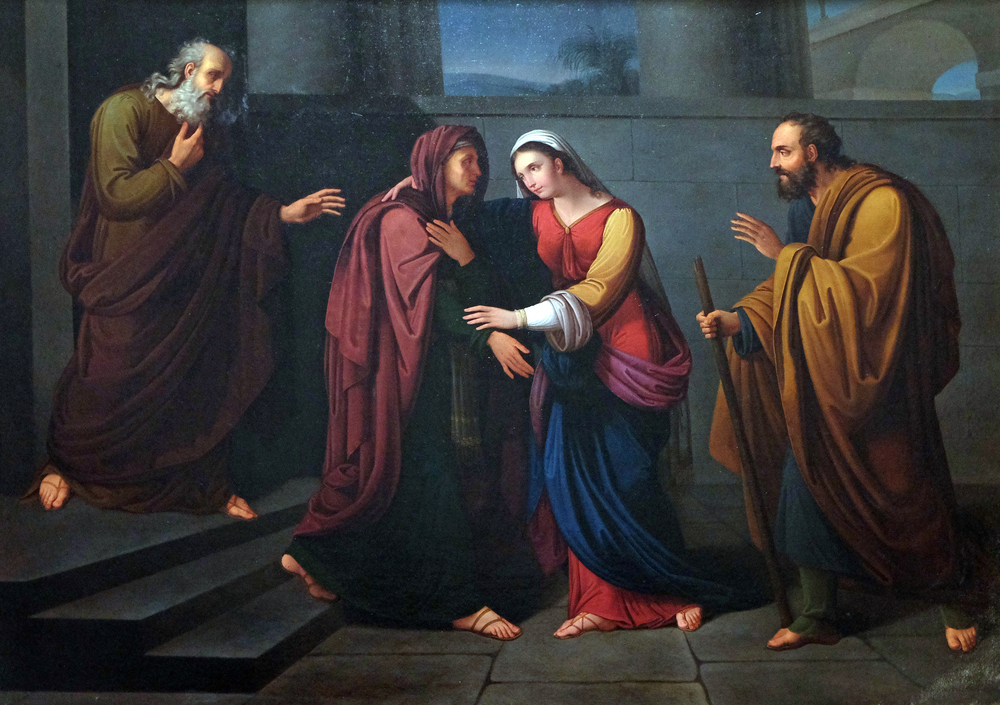
Though she was a relative of Zechariah, Mary initially was a person of very little consequence. A teenage pregnancy in a small backwater village would gain little attention. Perhaps one of the least verifiable claims of the Christmas story is that Jesus was born of a virgin. In pure biological terms, the story is hard to swallow. But that is exactly the point. The people in that day were fully aware of what is required for babies to be born. Attributing Jesus’ birth to divine conception would have been a ridiculous way to cover up an indiscretion – unless there was some truth to the matter.
What makes the virgin birth even more plausible is all the other supernatural events surrounding Jesus’ birth as well as his forthcoming death and resurrection. If God can raise Jesus from the dead, a virgin birth would not have been too difficult to pull off. The plausibility of a virgin birth should not be a distraction from the most important miracle which is central to this story: the invasion of God into the world – God taking on human nature – the incarnation.
There have been numerous attempts to provide naturalistic explanations for the star seen by the Magi, but the description of the star recorded by Matthew defies such explanations. I elaborated on this point in a previous post (read Kepler and the Christmas Star). Further, the arrival of the Magi with gifts in hand also defies a natural explanation. But there they were. Their gifts were more than just a way to honor the Messiah, but a unique provision for Joseph and Mary in their later flight to Egypt.

The angelic visit to the shepherds would seem to be an odd inclusion in this story since shepherds were very low-class citizens. They were poor people hired to watch other people’s sheep. Their condition out in the field would have made them ceremonially unclean – hardly fit for angelic visitors. If the gospel writers were trying to promote a false narrative, the last thing they would want do is include a story about a bunch of smelly shepherds. This is actually a feature which makes the gospel accounts more reliable. The shepherd’s story is is not included because it extols greatness – it is added because it is true and tells us something about Jesus.
The persons of Simeon and Anna were long-time fixtures in the temple. The Jews living in Jerusalem would have been well acquainted with them, and probably knew something about their reasons for always being in the temple.
The flight of Joseph, Mary and Jesus which follows the nativity scene is consistent with the nature of Herod’s rule. While the Jewish historian, Josephus, did not write about the killing of babies in Bethlehem, he did write much about the tumultuous events surrounding Herod’s family and reign, and indicated much about his bloodlust. The killing of babies in Bethlehem would have been a small detail in a much larger environment of unrest.

Given the distinctive supernatural nature of the Christmas story, how can we correct the inadequacy of our nativity scenes? Creches by their nature are made of physical materials and cannot be expected to portray immaterial events. I do not think there is any object you can add to the creche to make it better. Rather, we need to use something immaterial to convey immaterial events – we need to use language. We cannot let the creche tell the story – we need to tell the story. A creche provides physical objects which can help tell the story, but we need to use language – story telling – to relay all the supernatural events which brought it about.
[1] Much has been written about the reliability of the New Testament documents. If you are interested in greater detail on this, consider reading The Historical Reliability of the Gospels by Craig L. Blomberg or Can We Trust the Gospels? By Peter J. Williams.
 Cicada Song