I live in a land-locked state in which bodies of water are limited in size. What we call lakes and rivers are laughable to folks from the upper Midwest. If somebody here tells me they are a fisherman, I have a distinct image in mind: a person in hip waders standing in a stream with a rod, a box of flies and a fishing net consisting of a small mesh pouch attached to a hoop frame with a handle. Many fishermen here do so as a sport and make a practice of catch and release. Fish seldom find their way to my plate because “beef is what’s for dinner”.
Left to my personal context, I am culturally ill-equipped to grasp the instances in the New Testament in which fish play a central role in the story. There are four vignettes in the gospels in which a miraculous event involving fish is used by Jesus to teach his followers important lessons about the kingdom of God. I’ll examine two of those here, and reserve the other two for a later post (which you can read here). My ability to understand and apply these lessons is dependent on my understanding of the culture in which the stories were written.
The first of these is the story recorded by Luke in which Jesus is launching his ministry and is on the lookout for disciples. He finds himself on the shore of lake Gennesaret (aka, Sea of Galilee) surrounded by a crowd of people eager to hear him preach. Nearby are a couple boats pulled up on shore which belong to some fishermen who are busy cleaning their nets. Jesus commandeers one of these boats as a makeshift pulpit which allows him enough distance to be able to speak to the crowd.

After speaking to the people, he asks the fishermen to take their boat out further, and put out their nets to catch some fish. This does not seem like too odd of a request, but the fishermen tell Jesus he should not get his hopes up – they have been fishing all night with no success – the fish are not in this area. They know fish are not evenly distributed in lakes. Fish are present because the conditions are right – oxygen levels, temperature, and particularly food availability. If they have not caught any fish by now, they know the fish have moved to someplace else in the lake with better conditions. From years of experience, the fishermen have good reason for their doubts, but they humor Jesus anyway[1].
Much to their surprise, the nets become filled to the breaking point with fish. The other boat is called out to help take in the catch, and both boats are filled beyond capacity with fish. If fish were starting to come back to the area, one might expect a few fish in the nets, but this exceeds any natural explanation. This fact is not lost on the fishermen, and their attitude toward Jesus dramatically changed. Previously, they addressed him as “Master” (a term of respect toward any rabbi), but afterward Jesus is addressed as “Lord”, a person in high authority. What is more, Peter falls before Jesus stricken by his own sinfulness – a response reminiscent of when the prophet Isaiah fell to his knees before God[2].
In this, we see two clear indications by Luke about the deity of Christ. Here (and in several other events recorded in his gospel), Luke demonstrates Jesus’ authority over nature. It is clear something supernatural has occurred here, and Jesus is the cause for it – he is no mere man. Second, when Simon Peter bows before Jesus with contrite heart, Jesus does not correct him – he accepts the worship. This would only be appropriate if Jesus understood himself to be the God he is.
Jesus uses this event as an object lesson for these soon-to-be disciples when he tells them he will make them fishers of men[3]. This is the point at which my Colorado understanding of a fisherman fails me – Jesus has a different kind of fishing in mind.

By analogy, Jesus indicated the ministry of evangelism and disciple making – being “fishers of men” – is acceptably a vocation. While it is not necessary for every fisherman to do that for a living, kingdom building requires that some are. Jesus would emphasize later on the appropriateness of being paid for gospel ministry, and the apostle Paul instructed the church about this as well[4]. Like most vocations it requires some training, and Jesus informs these budding disciples he is going to provide that.
By design, the ministry Jesus is calling his disciples to involves a particular method. This ministry, this “fishing”, operates by casting a “net” rather than using lures, flies or bait to attract the “fish”. The apostle Paul described the nature of this ministry when he wrote, “When I came to you, brothers, I did not come with eloquence or superior wisdom as I proclaimed to you the testimony about God…My message and my preaching were not with wise and persuasive words, but with a demonstration of the Spirit’s power[5].
The “net” (which these new disciples will learn about later) is the good news that comes from the death and resurrection of Jesus. The task of Jesus’s disciples will simply be to faithfully share the gospel. They will not be in control of who will be drawn in by this net, and that continues to be true today. Not everyone who sits in a church pew is a true follower of Christ. Recent surveys indicate that a high percentage of church attenders do not have a correct understanding of the gospel, believing instead that salvation is something we can earn by being good[6]. Jesus taught that, in the end, the fish in the net will be separated[7] – the good from the bad. Thankfully, it is not for us to determine whose hearts are rightly turned toward God.
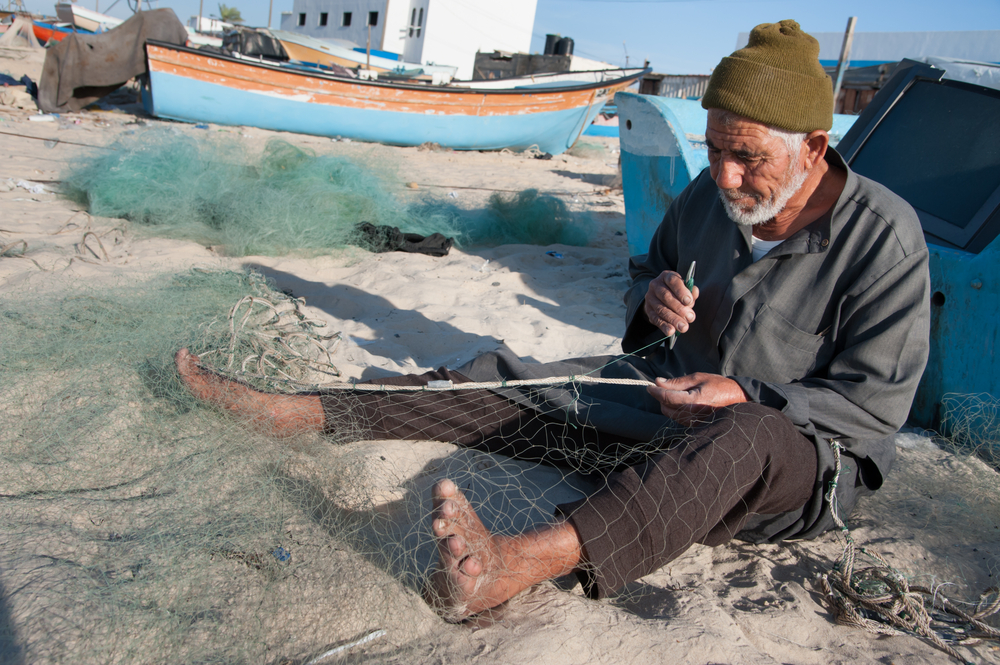
Also, by analogy, “fishermen” have an obligation to tend the net – to make sure it is not damaged or corrupted. Early on, the apostles had to battle the Judaizers who sought to add requirements to the gospel. There are indications in the epistles written by Paul and John that they were working to fend off Gnosticism. Later still, the church fathers carefully constructed the creeds to counter various heresies which threatened to undermine the gospel. Today, there continue to be attempts to change the gospel into a message of a man-centered salvation either by requiring works as a condition of salvation or by asserting some new wisdom which negates the need for the cross.
Years after this fishing encounter with Jesus, the disciples found themselves in a very different place. With their time following Jesus ending in a tumult after his death and resurrection, no doubt they were disoriented and confused. Not sure about what was to come next for them, some of the disciples returned to what was familiar – fishing. They went back to the Sea of Galilee, got in their boats with their nets, and tried to catch some fish. After a night of labor found them with no success, a man on the beach told them to cast their nets on the other side of the boat. A ridiculous suggestion to be sure, but perhaps to show the foolishness of this spectator, they followed his direction. Like years before, their nets are suddenly filled to capacity, and they realize the man on the beach is none other than Jesus himself[8].
After towing the net to shore, they see that Jesus had already built a fire and was cooking some fish and bread. Then Jesus makes an interesting request of these disciples. He tells them to bring some of the fish to the fire for their breakfast on the beach. Several important dynamics about ministry come out of this story recounted by John.
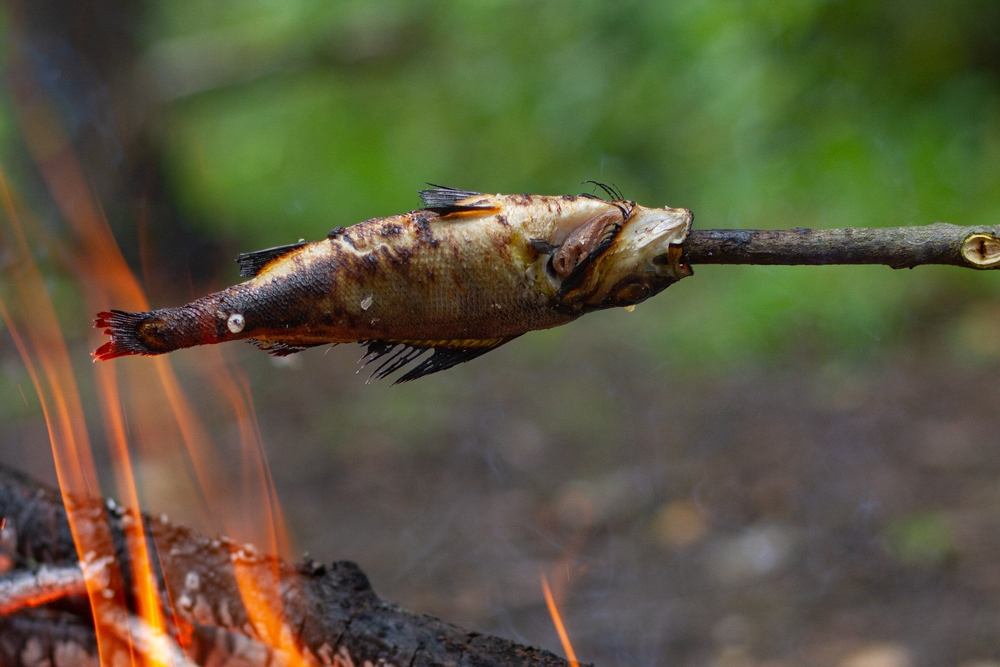
First, is the importance of remembering. By reenacting the miracle, I think Jesus is encouraging them to recall all the things they have seen and heard since the beginning. What Jesus had revealed to them about becoming fishers of men three years before has now come into clearer focus. They are reminded that apart from God, their human efforts to “catch fish” will be fruitless. Success in ministry results from following the wisdom and teaching of Jesus, not human wisdom. While it is the power of God’s Spirit which draws men to himself, he is asking his disciples to play a part in what he is doing – he asked them to bring some fish to the fire.
If you are a follower of Jesus, you have a role to play as a fisherman in the boat. In what ways are you helping to cast out the net of the gospel – to tell others about the good news? How are you becoming equipped to do this, whether vocationally or not? Are you helping to bring the fish into the boat – caring for and discipling people who have come into the church? Do you take care of the net – defending the faith and protecting the gospel from being corrupted (i.e., apologetics)? In what way are you bringing your fish to the fire?
[1] Luke 5:1-11
[2] Isaiah 6:1-8
[3] See also Mattew 4:18-22, Mark 1:16-20 and John 1:35-42
[4] Luke 10:7, 1 Corinthians 9:9-12 and 1 Timothy 5:17-18
[5] 1 Corinthians 2:1-4
[6] For example, see https://www.arizonachristian.edu/2020/08/04/1-in-3-us-adults-embrace-salvation-through-jesus-more-believe-it-can-be-earned/, accessed 7/25/24.
[7] Matthew 13:47-50
[8] John 21:1-13
 Cicada Song
I notice how God used a memory from the disciples’ past to open their eyes, ears, and minds to Who was really on the beach. A good thing to pray for others as well as for ourselves.
LikeLiked by 1 person