Alright, I will begin with an apology for the bad pun in the title, but I could not help myself. What started me wondering about acacia was the frequent use of this wood in the tabernacle as described in the book of Exodus (ch 25-30). It is the only type of wood prescribed in the construction of the tabernacle and its furnishings. Additionally, beyond these instructional passages, there is almost no reference to this tree elsewhere in scripture. Is there any significance to its specific use here or is it just a trivial detail?
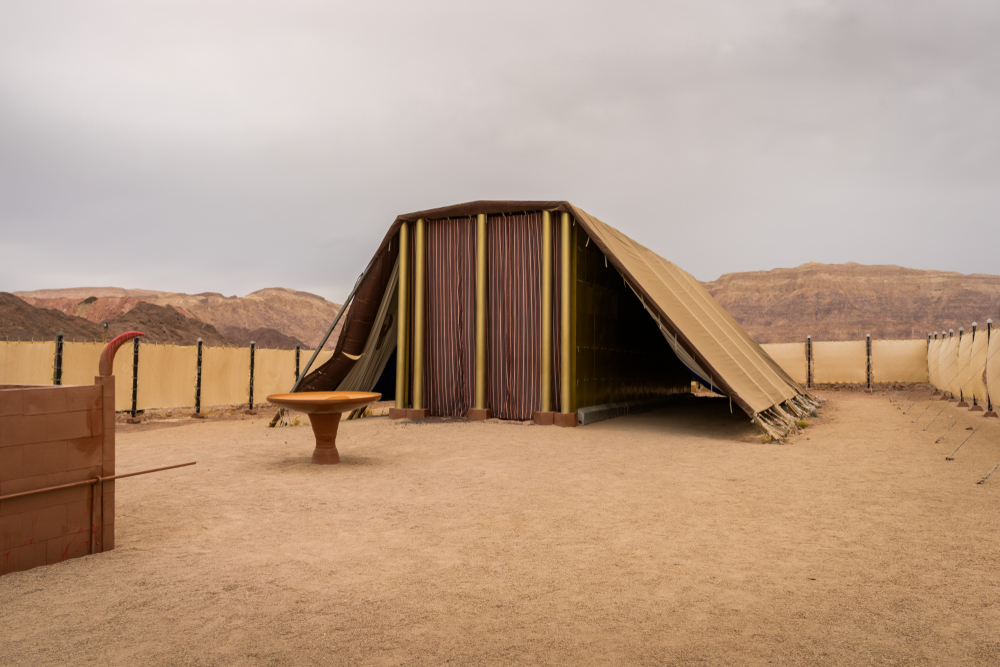
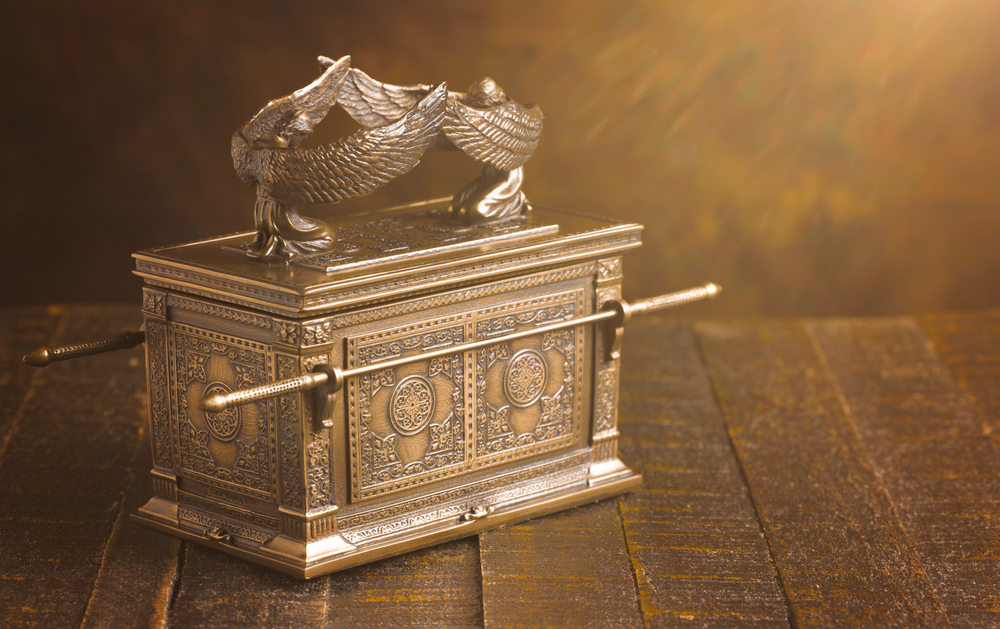
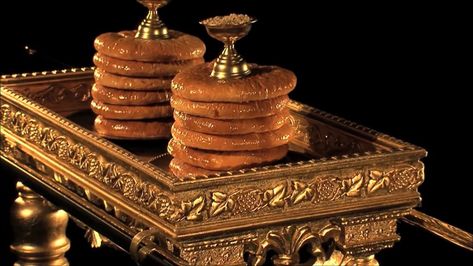
The tabernacle was a mobile sanctuary carried by the Israelites as they wandered in the wilderness for forty years. It stood as a symbol of God’s dwelling with His chosen people as they were delivered out of Egypt. Acacia wood was to be used for 1) the box (the ark) containing the covenantal tablets, 2) the table for holding the bread of presence, 3) the framework to support the curtains which defined the walls of the tabernacle and the Most Holy Place, 3) the altar for burnt offerings, 4) the altar of incense, and 5) all the poles needed to carry the furnishings of the tabernacle. The ark of the covenant, the table for the bread and the table of incense were all covered in gold while the altar for burnt offerings was overlaid with bronze.
So, why insist on using acacia wood for all these things? One possible answer is that it was the only material available. In the Sinai Peninsula today there are other trees present, but none which would be large enough for cutting planks the size required for all the items in the tabernacle. However, there may have been other large trees available several thousand years ago. The prophet Isaiah mentions cedar, myrtle, olive, cypress and pine trees also being found in the wilderness along with acacia (Isaiah 41:19). Assuming there were choices available, why choose acacia wood? I think it was likely chosen because of its known characteristics of strength and durability compared to other types of wood.
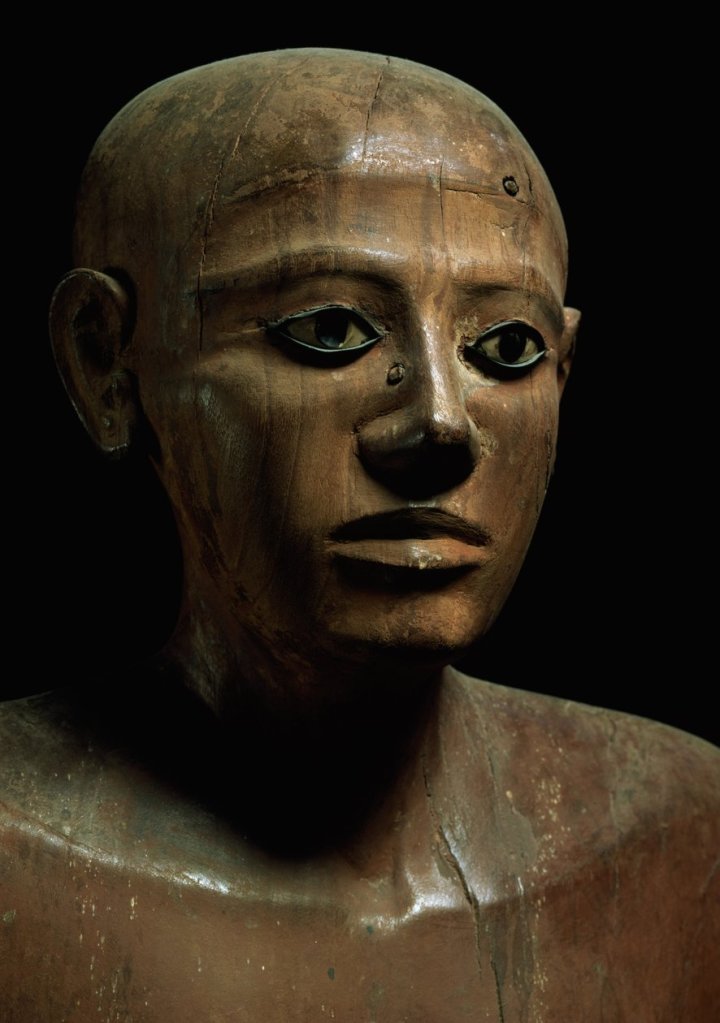
After entering the promised land, the tabernacle was erected in Shiloh (about 1258 BC) and remained for nearly 400 years until it was destroyed by the Philistines who carried off the ark of the covenant. The ark was eventually restored to Israel and found its place in Solomen’s temple. There it remained until Jerusalem was taken by the Babylonians (about 586 BC), and since has been lost to history (or is buried inside a U.S. government warehouse). This means the wood which made up the ark lasted for over 700 years. A testament to the enduring quality of acacia wood is a statue of Chancellor Nakhti found in his tomb in Egypt which dates to about 1,900 BC. Even some stone age tools have been discovered which contain acacia wood.
The enduring quality of acacia wood results from the natural history of the tree itself. The acacia tree grows in arid environments so its roots can go as deep as ten feet and extend two to three times the width of its canopy. Because of low water availability the tree grows very slowly which makes the size of the cells within the wood relatively small. Small compact cells make the wood grain very dense – it is one of the hardest woods on earth. Additionally, the acacia tree produces oils which infuse the wood making it resistant to decay from both water and wood boring pests.
So, is the choice of acacia wood just a practical one or is there more to it? Because the author of Exodus makes a pattern of repetition with specific reference to acacia wood, I presume the later – that there is some symbolism tied to its use. Given the symbolic nature of many of the other materials and decorations within the tabernacle, and even the symbolic nature of the tabernacle itself, it is reasonable to assume there is symbolic significance of the acacia wood as well. Because of its known strength and durability acacia wood symbolizes God’s enduring and incorruptible nature.

Just as acacia wood is at the core of the ark, so is God’s enduring and incorruptible nature at the core of “holding” or keeping the covenant made with his people. Time and again we see how the people of Israel failed to uphold their side of the covenant, but God persisted in the relationship. This remains true today as we have transitioned to the new covenant established in Christ.
Just as acacia wood is at the heart of the table made for the bread of presence, so is God’s enduring nature and incorruptible nature at the heart of God’s support for the tribes of Israel. The bread on the table included 12 loaves representing the tribes of Israel. The loaves were replaced every sabbath. This signifies to me that the tribes themselves may not endure, but the “table” upon which they rest does. God said to Israel, “I will strengthen you, I will help you, I will uphold you with my righteous right hand” (Isaiah 41:10).
Just as acacia wood is foundational to the building of the table of incense, so is God’s enduring and incorruptible nature foundational to the prayers of the people of God. The burning of incense on the table in the tabernacle was symbolic of prayers rising to God. Prayer was a regular feature in the lives of the patriarchs and the saints who were confident in what the psalmist declared: “Delight yourself in the Lord, and he will give you the desires of your heart” (Psalm 37:4) and what Jesus promised: “If you ask me anything in my name, I will do it” (John 14:14). The roots of the acacia tree run deep, and if our prayers are rooted in God’s will, He will do it.
Just as acacia wood is central to the structure of the altar of burnt offerings, so is God’s enduring and incorruptible nature central to God’s work to redeem and sanctify those who follow him. God is holy and cannot dwell with the wicked (Psalm 5:4), yet He has determined it is blood sacrifice which will be sufficient to atone for sins (Leviticus 17:11). He also lets us know that He, like the slow growing acacia tree, is not a God who races to judgement, but “is gracious and merciful, slow to anger, and abounding in steadfast love; and he relents over disaster” (Joel 2:13). Though blood sacrifices are necessary, they are not separate from God’s nature. Proverbs 16:6 reminds us that iniquity is atoned for by steadfast love and faithfulness. These sacrifices in the tabernacle foreshadowed the eventual sacrifice God would make himself through Christ on the cross (see Hebrews 9:11-14).
Just as acacia wood is the framework which holds up the walls of the tabernacle, so is God’s enduring and incorruptible nature the framework upon which his persistent desire to dwell among his people rests. Despite the repeated rebellion of Israel, God is enduringly determined to dwell with those who love him. One of the prophets wrote, “You shall know that I am in the midst of Israel, and that I am the Lord your God and there is none else” (Joel 2:27). This same prophet foretold the time when God’s Spirit would be poured out on all peoples. Central to Christian belief and experience is God’s indwelling of those who follow him (See John 1:14; Romans 8:9, 11; Colossians 1:27; Revelation 21:3).
So, no, the prescription of acacia wood in the construction of the tabernacle is not just a trivial detail. Rather, it represents what is at the heart of God in his desire to restore the relationship with mankind which was broken by our sin. God is enduring in his relational nature and he is incorruptible. He cannot dwell with evil, so He solved the sin problem through Christ. For those who accept this free Gift from God he promised to “never leave you nor forsake you” and to be “with you always, to the end of the age” (see Joshua 1:5 and Matthew 28:20).
 Cicada Song